Therapist Facebook Canva Post Templates
As mental health professionals, we often find ourselves stuck in a paradox: we are experts in human connection, yet we struggle to connect digitally. You know how to build rapport in a session, but translating that warmth into a static image for Facebook can feel awkward. This is where the right visual tools become essential. I’ve worked with enough wellness brands to know that the "cottagecore" or overly clinical aesthetic doesn't always work. You need something that balances professionalism with approachability.
Visual Character and Design Appeal
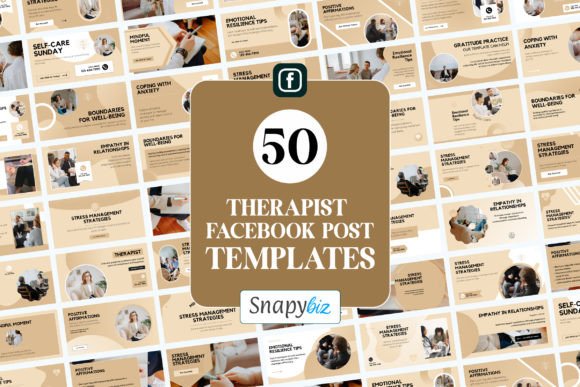
When we talk about a premium font or a design asset in the context of therapy, we aren't just talking about pretty letters. We are talking about psychology. The visual character of these Therapist Facebook Canva Post Templates is built on the principle of "calm authority." Typically, these templates utilize a modern sans serif font for body text to ensure maximum readability on mobile screens—crucial for clients scrolling through anxiety-inducing news feeds. The headings often employ a soft script font or a rounded serif font, which mimics the handwritten notes of a journal, creating an immediate sense of intimacy.
The personality of these assets is grounded and empathetic. You won't find aggressive neon colors or jarring geometric shapes. Instead, the palette usually leans towards earth tones, muted pastels, or clean monochromes. This isn't just aesthetic preference; it is a strategic brand identity choice. The "Psychotherapist Facebook Content Idea" style focuses on whitespace. It allows the eye to rest, signaling to the potential client that your space is safe and uncluttered. It is modern typography at its most functional—designed to lower the barrier to entry for someone seeking help.
Strategic Applications for Health Coaches
You might be wondering if these templates are too specific for a nutritionist or a life coach. They aren't. The versatility of a well-designed Canva template lies in its structure. Whether you are posting a quote, a carousel about boundaries, or a link to your latest blog, the layout serves the content.
For Therapist Coaches, the application extends beyond just "posting." It becomes a tool for visual hierarchy. A good template forces you to prioritize your message. Is the main takeaway the tip itself, or the call to action? By using a template with a pre-set hierarchy, you ensure that your social media graphics are not just beautiful, but functional.
- Social Media Graphics: Use these to break down complex topics like "Attachment Styles" into digestible carousels.
- Brand Identity: Consistency breeds trust. When a user sees your specific color palette and font pairing repeatedly, they begin to recognize you before they even read the text.
- Digital Marketing: Drive traffic to your lead magnets or free consultations using clear, high-contrast calls to action.
I recall working with a nutritionist who was struggling to gain traction. She switched from generic stock photos to a cohesive set of templates using a handwritten font for emphasis and a clean sans serif font for instructions. Her engagement tripled because the graphics finally matched the "homemade" feel of her meal plans. This is the power of matching the medium to the message.
Design Mechanics and Readability
Let's get practical. How do you actually use these design assets without looking like you just slapped a sticker on a background? The key is customization. A template is a starting point, not a finished product.
First, consider your font pairing. If the template comes with a script font for headers, ensure it is legible. If your audience skews older (40-50), a thin, loopy script might be difficult to read. Swap it for a bold display font that retains personality but offers better readability. Canva makes this easy, but you need to know what to look for.
Second, look at the visual hierarchy. In editorial design or packaging design, the hierarchy guides the eye from the headline to the subhead, then to the body copy. Your Facebook post should do the same. Don't just center everything. Use the alignment provided in the template to create a natural flow. If you are creating a post about "5 Signs of Burnout," use the numbered styling often found in these Facebook Post Templates to create a rhythm.
Finally, think about commercial font licensing if you move beyond Canva. While the templates provide the graphics, if you ever decide to build a full website or print brochures, you need to ensure the typography used in your logo design and headers is licensed for commercial use. Most high-quality template bundles include fonts that are free for commercial use within the platform, but always double-check the fine print.
Elevating Your Professional Presence
The goal of using Therapist Facebook Canva Post Templates isn't just to fill a content calendar. It is to bridge the gap between your clinical expertise and your digital presence. By utilizing premium font combinations and thoughtful layouts, you signal to your audience that you take your practice seriously. You aren't just a therapist; you are a brand that values clarity, aesthetics, and the mental well-being of your community.
Whether you are a psychologist sharing research or a health coach offering motivation, these tools allow you to communicate with the same nuance online as you do in person. Stop wrestling with design software and start communicating your value. With the right templates, your content becomes a magnet for the clients who need you most.